Education Insights
4 Design Practices for the Modern Learning Environment

MTSU Science Building

As technology, curriculums, and campuses evolve in the education sector, schools are becoming more than just a place for learning. Academics are at the forefront, but it’s also a place that builds future leaders, fosters community, and creates a space for mental and physical well-being. Education design has adapted to these changes, creating more well-rounded facilities that meet the needs of students, educators, and community members alike.
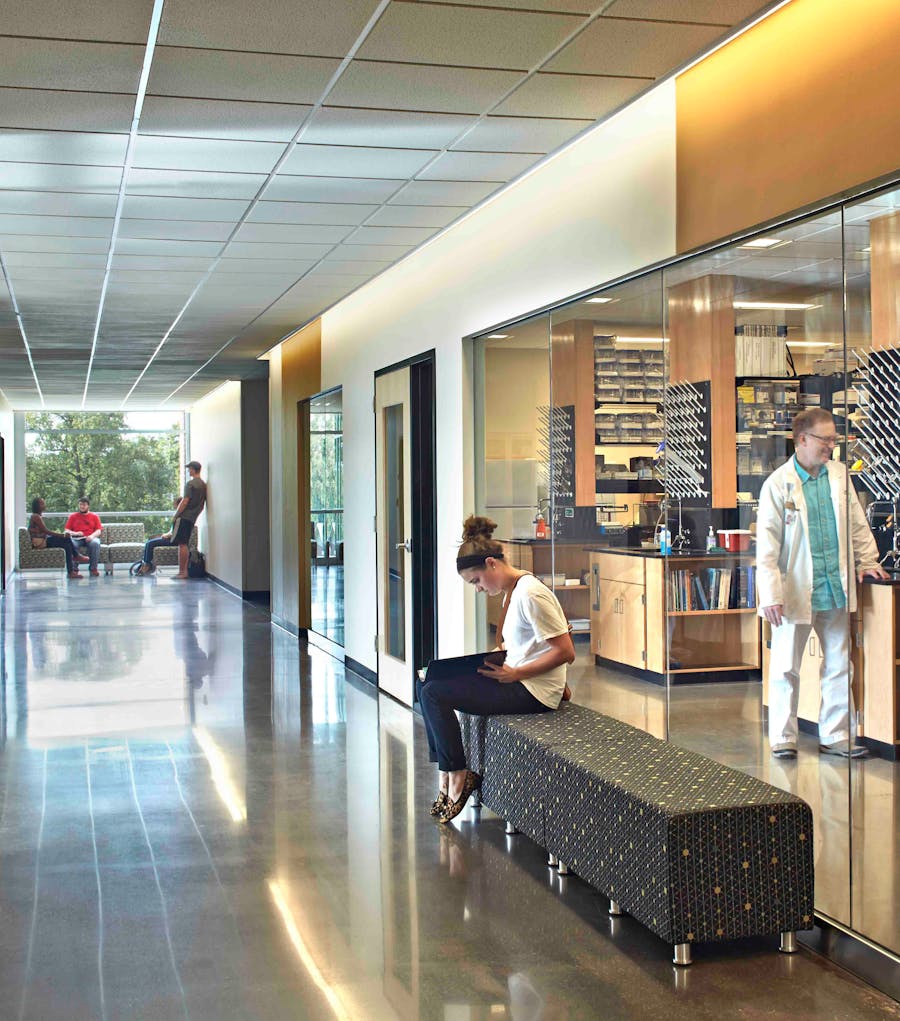
The MTSU Science Building has intentional gathering spots within hallways, and a variety of classroom types.
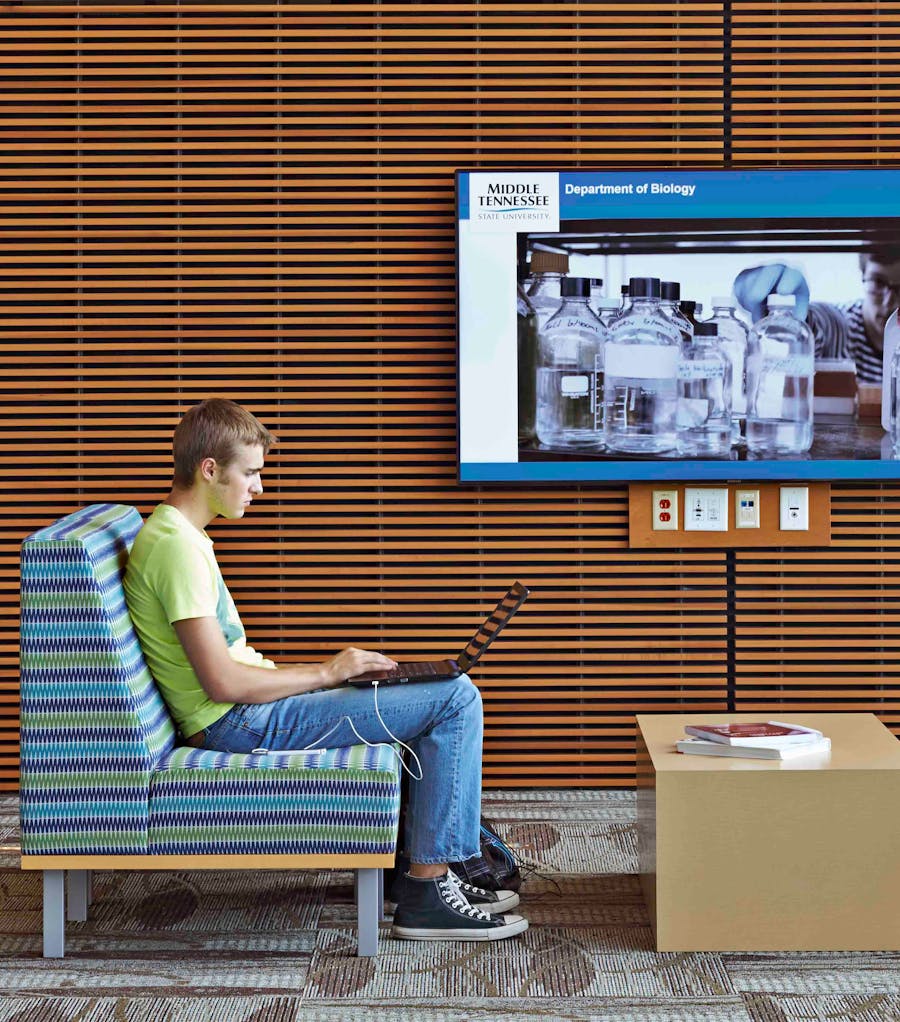
Outlets, enhanced Wi-Fi, and various-sized monitors throughout the facility are important to support all learning styles.
1. Flexibility for the Future
Gone are the days of the “computer lab” and portable projectors moving from classroom to classroom. With the innovations in technology and the shift to hybrid learning, flexible, future-proof systems installed directly within rooms are imperative.
Design strategies should include enhanced Wi-Fi, various-sized monitors, and upgrade-ready solutions throughout schools to support a variety of learning styles. At the Middle Tennessee State University (MTSU) Aerospace campus, different-sized monitors are designed throughout the building, but in a way for easy replacement in the future. This avoids any additional demolition or construction. High-quality A/V systems, microphones, and simple connectivity devices should be implemented to support digital learning. With the speed that technology changes, it needs to be planned for on the front end to keep facilities functional.
Another aspect of flexibility is adaptable classrooms and gathering spaces. Hallways, for example, are no longer just passthroughs — they’re places of connection and an extension of the learning environment. Mobile furniture, intentional gathering nooks, dividing walls in classrooms and auditoriums, acoustical treatments for noise control, and a variety of classroom styles like flat-floor, tiered, and discipline-specific all provide flexibility to build a space to different needs.
At the MTSU Science Building, a grand commons area serves as the facility’s central organizing element. Branching off, students learn in glass-walled research labs, active-learning classrooms, tiered lecture halls, and more — all of which can be adjusted for a variety of uses.

John Overton High School incorporated three outdoor courtyards for student gathering and connection.

The courtyards intentionally acted as connectors for the school's multiple buildings.
2. Collaboration and Cohesion
More than ever, students and teachers are interacting inside and outside of the classroom. Creating intentional spaces that encourage synergy establishes a community that supports better learning and mentorship. Adding elements like whiteboards, outlets, and seating in informal gathering spaces encourages spontaneous collaboration for students.
In a campus setting, where multiple buildings talk to each other, designing thoughtful outdoor spaces in between can help create a cohesive environment. At John Overton High School, three outdoor courtyards were created by relocating the existing library and cafeteria. This not only gave students more green space to gather and socialize in safe areas, but also acted as a connector for the school’s multiple buildings.

Paragon Mills Elementary's campus was redesigned to create a more efficient system for bus and car traffic.
3. Designing for Operational Excellence
What happens outside the classroom is just as important as what happens inside to keep a school running efficiently. Campuses need to be designed with operational aspects in mind like traffic flow, maintenance, and durability.
At Paragon Mills Elementary School, the entire campus was redesigned to create a separate drop-off lane for buses and cars that helped with traffic congestion, increased the number of cars within the lane, and kept it from overflowing into the nearby neighborhood. Playgrounds were relocated to prevent sightlines and noise from the road, and the main building entrance was moved to align with the primary street, creating a welcoming approach to campus that also simplifies wayfinding.
The renovation at Overton High School created a backdoor for bus drop-off, away from car traffic, and relocated the loading dock, dumpsters, and service areas from the center to the rear of the campus to free up space for protected, exterior learning spaces. A service road that previously went through the middle of campus was reconfigured as a loop road around campus to keep vehicles on the perimeter.
Durable, long-lasting materials are important for design consideration as well, but with budget in mind. Furniture should be coordinated with flooring types and easy-to-clean exterior materials and hardscapes are necessary.
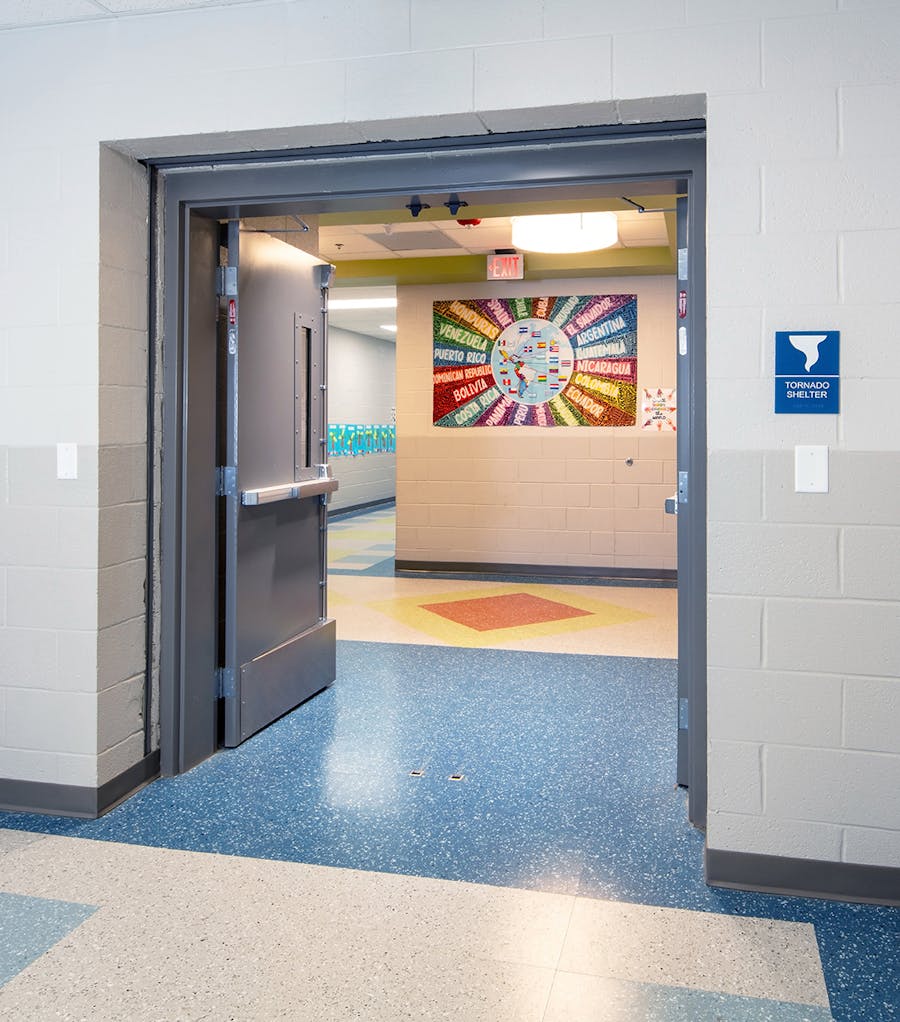
The Pre-K wing at Paragon Mills Elementary School doubles as a tornado shelter that can withstand a T5-category storm.

Paragon Mills includes a separate entry vestibule that allows the rest of the school to stay locked while access to community room remains open.
4. Keeping Everyone Safe and Secure
At the top of parents’ minds is the safety and security of their children while at school. Good design is paramount for creating a facility that offers shelter, resources, and protection during a safety event.
Paragon Mills Elementary’s design included intrusion-resistant film on glass at entrances. This film prevents intrusion at the exterior-most point, while a separate entry vestibule allows the rest of the school to be locked with access to a community room after hours. The Pre-K wing of the building doubles as a tornado shelter. Crime Prevention Through Environmental Design principles were also discussed in the initial planning, including things like separating car riders from bus riders, minimizing landscaping that provides hiding spots, and clear wayfinding and signage.
Another safety aspect to consider is limiting the number of exterior doors and designating exit-only doors that don't have any outside hardware. This helps deter intruders through design. The MTSU Aerospace building is unique in the amount of secure doors they have, due to the nature of the curriculum. Security cameras are located at every entrance and several are exit-only.
All schools should include a well-lit campus, doors with glass vision panels or sidelights, and security systems in place.

Clear, well-lit pathways between campus buildings are part of Crime Prevention Through Environmental Design.
By focusing on these four design practices, education facilities of all types can not only provide the best academic experience possible, but foster safe community and connection too.